Top 10 Tips for Choosing the Right Furniture Screw for Your Projects?
Choosing the right furniture screw can significantly impact your project. A good screw ensures stability and longevity in your furniture pieces. You might feel overwhelmed by the options available.
Consider the material of your furniture. Different woods and composites respond differently to various screws. A wrong choice might lead to stripped holes or weakened joints.
Also, think about the size and type of screw needed. Some projects may require flat-head screws, while others need round heads. There’s a learning curve involved. Taking the time to assess your needs can prevent frustrating mistakes down the line. Each decision matters when building or repairing furniture.
Understanding the Different Types of Furniture Screws Available
When selecting the right furniture screws, understanding the available types is crucial. There are several common categories. Wood screws usually feature sharp tips. They are perfect for joining wooden items. They create strong joints in furniture assembly. Another option is machine screws. These are often used with nuts or bolts. They provide high strength and stability.
A report from the Furniture Industry Research Institute found that over 40% of furniture failures are due to inadequate fasteners. This highlights the importance of choosing the right screw. For example, drywall screws are also popular. They are designed specifically for attaching drywall but can be handy in certain furniture projects too. However, they may not offer the same holding power as wood screws when used incorrectly.
Consideration must also be given to screw length. Screws that are too short may lead to weak joints. Conversely, overlong screws can split the wood. A recent survey indicated that 25% of DIY enthusiasts regularly misuse screw sizes. This error often complicates projects, leading to frustration. Understanding the various screw types and their appropriate uses is essential for successful furniture assembly.
Top 10 Tips for Choosing the Right Furniture Screw for Your Projects
| Screw Type |
Material |
Length (inches) |
Diameter (gauge) |
Recommended Use |
| Wood Screw |
Steel |
1.25 |
8 |
Joining wood pieces |
| Machine Screw |
Stainless Steel |
0.75 |
10 |
Metal assemblies |
| Self-tapping Screw |
Brass |
1 |
6 |
Plastic and wood |
| Lag Screw |
Steel |
3 |
3/8 |
Heavy duty furniture |
| Counter Sink Screw |
Zinc-plated Steel |
1.5 |
10 |
Flush fitting applications |
| Wood Plug Screw |
Steel |
1.25 |
8 |
Concealing screw heads |
| Euro Screw |
Steel |
1 |
6 |
Flat-pack furniture assembly |
| Hinge Screw |
Brass |
1.75 |
8 |
Hinge installation |
| Deck Screw |
Coated Steel |
2 |
7 |
Outdoor furniture |
| Rivet |
Aluminum |
0.5 |
N/A |
Permanent fastening |
Evaluating Material Compatibility for Furniture Screws
Choosing the right furniture screw involves careful consideration of material compatibility. When selecting screws, it is crucial to match the screw material with the furniture's material. For instance, using steel screws on hardwood can offer durability, but may lead to corrosion. This can weaken the connection over time.
A study by the American Wood Council indicates that nearly 25% of furniture failures are linked to improper fasteners. Wood types, like oak and maple, absorb moisture differently than softwoods. This influences the choice of screw materials. Stainless steel or brass screws are often recommended for their resistance to rust, especially in humid environments.
While it might be tempting to use the same screws for every project, variations exist. For example, a lightweight particleboard may require different screws than a solid wood frame. Using the wrong screw material can lead to issues like splitting or loosening. Always ensure that the chosen screws cater specifically to the furniture material being used.
Determining the Appropriate Screw Length for Your Project
Choosing the right screw length is crucial for any furniture project. It affects stability and durability. A screw that is too short may not hold securely. However, a screw that is too long can damage the material. This can lead to splintering or other issues. The goal is to strike a balance.
Consider the thickness of the materials you are joining. A good rule of thumb is to use screws that penetrate at least half of one material's thickness. For instance, if you are working with a 1-inch thick board, look for screws that are at least 1.5 inches long. Always measure before cutting or purchasing your screws. It sounds simple, yet many overlook this step.
Sometimes, trial and error can lead to unexpected results. Don’t be discouraged if the first screw isn’t the right fit. It’s part of the learning process. Keep a variety of screws on hand, and experiment with different lengths. This way, you can find what works best for your specific project. Reflect on your choices, and adjust in future endeavors.
Assessing the Thread Type and Pitch for Optimal Grip
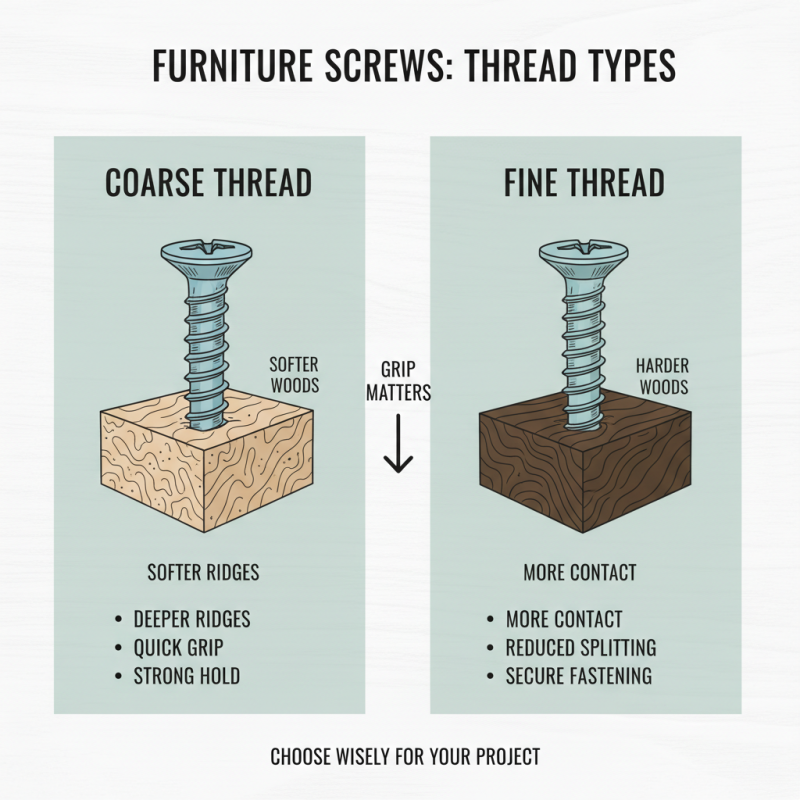
Choosing the right furniture screw is crucial for your projects. The thread type matters. It directly influences how well the screw grips the material. A coarse thread has deeper ridges and works well in softer woods. It bites quickly and provides a solid hold. Fine threads, on the other hand, are ideal for harder woods. They offer more surface area to grip, minimizing the chance of splitting.
When assessing pitch, consider the distance between each thread. A tighter pitch means more threads per inch. This is beneficial for finer control and stability. A wider pitch works for quick assembly but may sacrifice strength. Pay attention to the material of the screw as well. Steel screws work great in most cases, but stainless steel is essential for outdoor furniture.
Choosing the wrong thread type can lead to regrets. You might find screws that strip easily or fail to hold. Testing different types on scrap material can save you time. Don’t hesitate to do a trial run. It’s a small effort that yields better results. Always rethink your choice of screws before committing.
Considering the Head Style of Screws for Aesthetic and Functional Needs
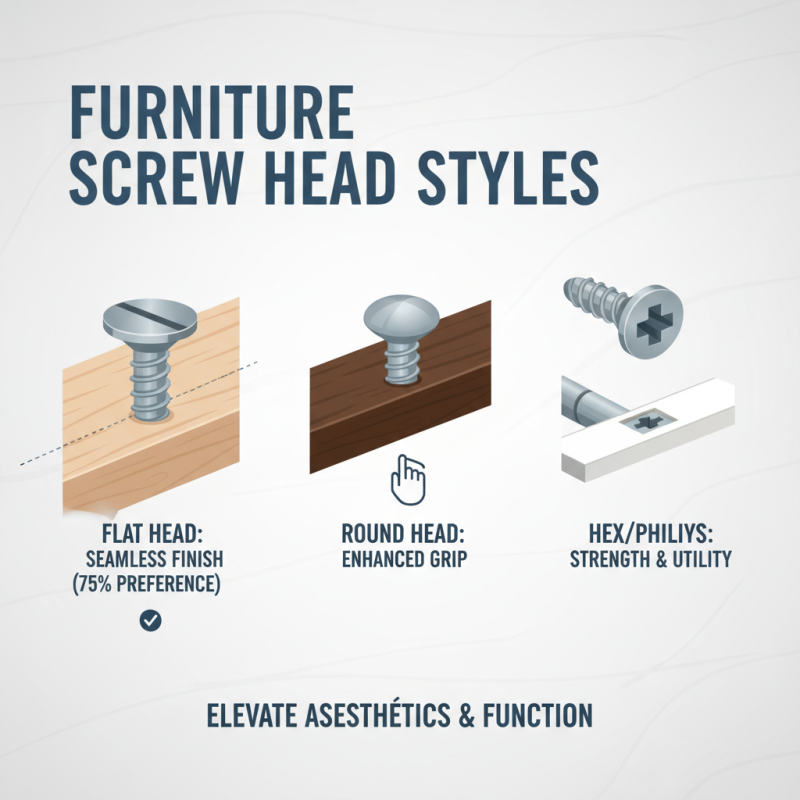
When selecting furniture screws, the head style plays a crucial role. Different head styles can significantly affect both aesthetics and functionality. For instance, flat heads are often used for a flush finish, while round heads provide more grip. A study found that 75% of consumers prefer a seamless appearance in modern furniture designs. Ensuring that the screw heads complement the piece can elevate its overall look.
Using the right head style can also enhance the strength and durability of your project. For example, Phillips heads provide better torque and are less likely to strip than slotted heads. According to research from the Furniture Manufacturing Institute, choosing the wrong screw type can lead to 50% more product defects. Attention to detail isn't just aesthetic; it impacts long-term functionality. Reflecting on past projects can yield insights. Have you ever overlooked a simple detail? Those moments can lead to unexpected challenges down the line. Focusing on head styles means balancing form and function. Make each choice thoughtful.