How to Choose the Right Carriage Bolt for Your Project?
Choosing the right carriage bolt for your project is crucial to ensuring structural integrity and long-lasting performance. According to industry reports, fasteners account for up to 10% of total construction costs. Selecting the correct fastener can significantly impact this figure. The carriage bolt, noted for its rounded head and square neck, offers distinct advantages in applications ranging from woodworking to heavy equipment assembly.
The World Steel Association states that approximately 90% of construction projects utilize steel fasteners, with carriage bolts being a favored choice among builders. Their design allows for excellent grip and resistance to shearing forces. Yet, many users overlook the importance of size and material selection. This can lead to unforeseen issues like weakened connections or premature fatigue.
Precision matters. A miscalculation in bolt length or diameter can compromise the entire structure. Consulting specifications and understanding load requirements are essential steps. Some may question the need for a detailed selection process, but neglecting this can result in costly repairs or safety hazards down the line. Adopting a thoughtful, informed approach to choosing your carriage bolt will enhance the longevity and reliability of your project.
Understanding Carriage Bolt Specifications and Dimensions
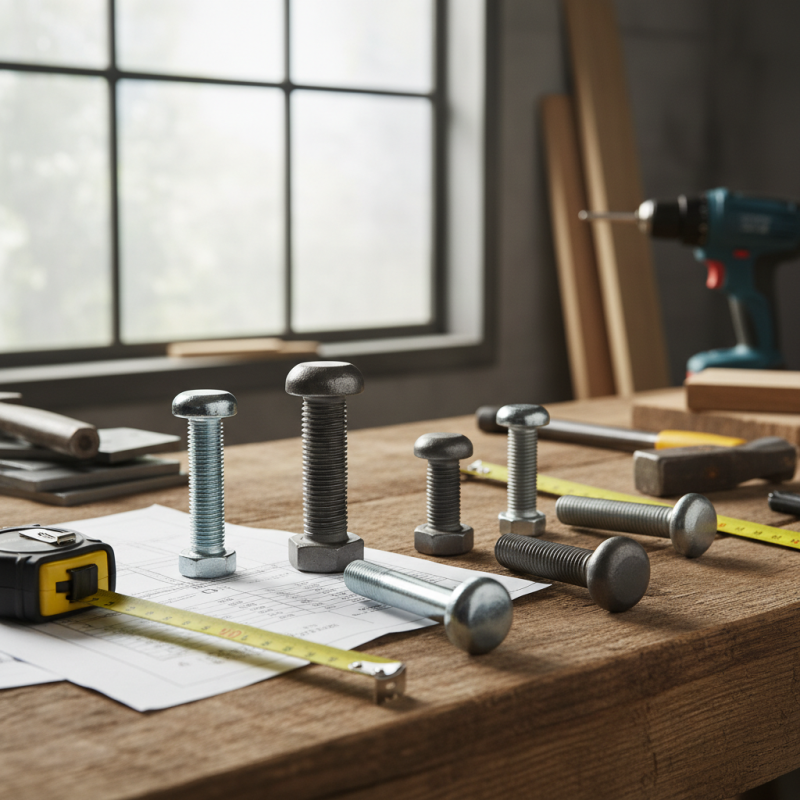
When choosing a carriage bolt, understanding specifications and dimensions is crucial. Carriage bolts typically have a smooth, rounded head. This design allows for a clean finish and prevents the bolt from turning in place. The length of your carriage bolt is key; it must be long enough to pass through the materials you are joining.
Consider the diameter, as it affects the bolt's strength. Common sizes range from 1/4 inch to 1 inch. Ensure you match the diameter to the hole size in the materials. A snug fit is ideal, but it should not be overly tight.
Tips: Always measure the thickness of the materials before selection. This avoids mismatch problems. Remember, not all projects require the same strength. Sometimes, a smaller bolt will do the job just fine. Inspect the finish and material of the bolt. A poor choice can lead to corrosion or compromised structural integrity over time.
Material Selection: Steel vs. Stainless Steel vs. Aluminum
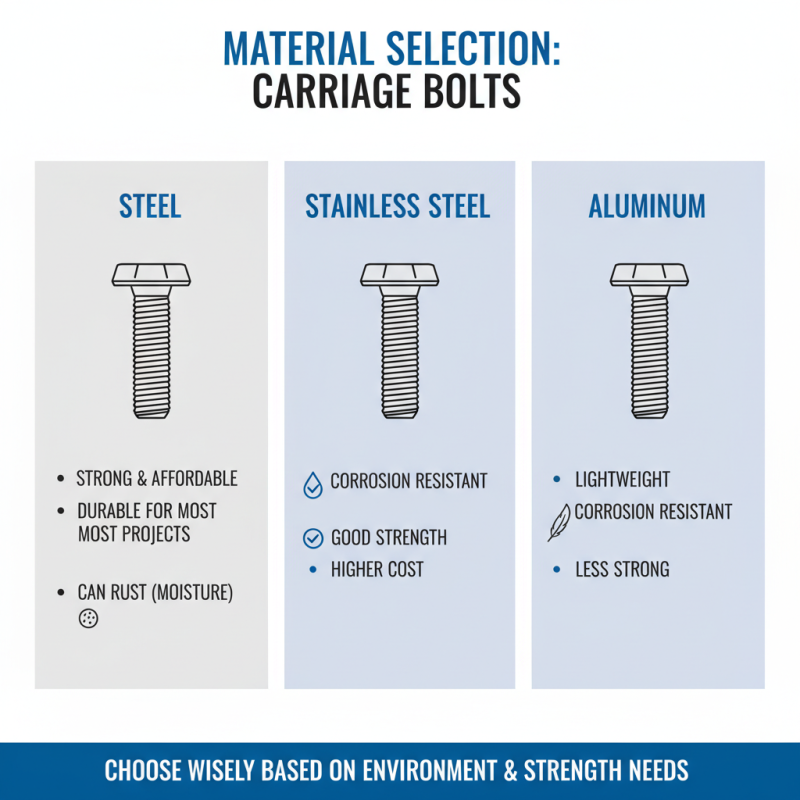
When choosing the right carriage bolt, material selection is crucial. Steel bolts are strong and affordable. They are suitable for most projects that require durability. However, steel can rust if exposed to moisture. This can compromise structural integrity over time.
Stainless steel is resistant to corrosion. It is an excellent choice for outdoor projects or areas with high humidity. The trade-off is cost; stainless steel bolts are generally more expensive than their steel counterparts. They offer longevity, making them a wise investment.
Aluminum bolts are lightweight and resistant to corrosion. They work well in applications where weight is a concern, such as in aviation or automotive projects. But aluminum may not have the same strength as steel. Choosing the right material depends on the project requirements. Always consider the environment and specific needs. A wrong choice might lead to structural failure or safety hazards, prompting a necessary future review.
Determining the Appropriate Length and Diameter for Your Project
Choosing the right length and diameter for a carriage bolt is crucial. The bolt's length must exceed the thickness of the materials being fastened. The additional length allows for proper thread engagement. Typically, a minimum of 1.5 times the thickness of the material is recommended. According to industry reports, around 30% of fastener failures are due to improper lengths.
Diameter is equally important. A bolt that is too thin may not support the load required. Conversely, a bolt that is too thick can be difficult to install and may cause material damage. For most applications, a diameter range of 3/8" to 1/2" is standard. Data shows that using the correct diameter reduces the chance of failure by up to 40%.
When measuring, consider the specific requirements of your project. Each application has unique demands. Seeking advice from industry experts can provide valuable insights. Failing to get these details right can lead to costly repairs. Always pay attention to these crucial factors to ensure a secure and lasting assembly.
Choosing the Right Carriage Bolt: Length and Diameter
This chart illustrates the common sizes of carriage bolts, emphasizing their diameter and typical lengths used in various projects. The diameter is represented alongside the standard lengths, helping you to visualize the sizing options available when selecting the right carriage bolt for your specific needs.
Assessing Load Capacity and Tension Requirements in Bolted Joints
When working with bolted joints, assessing load capacity is crucial. This ensures that your project can withstand the weight and tension it encounters. The load capacity of a carriage bolt is determined by its size, material, and the grade of the bolt. For heavier loads, opt for larger bolts made from stronger materials. A grade 5 bolt is typically sufficient for moderate stresses, while grade 8 offers higher endurance.
Tension requirements also play a pivotal role in bolt selection. Proper tension ensures that the joint remains stable under dynamic loads. Over-tightening can lead to bolt failure, while under-tightening compromises the joint's integrity. Consider using a torque wrench to achieve precise tension. Additionally, it's essential to understand the environmental conditions where the joint will exist. Factors like humidity or exposure to chemicals can impact bolt performance.
Overall, selecting the right carriage bolt for your project involves a blend of science and experience. Often, a trial-and-error approach is necessary. Checking load capacity and tension requirements ensures safety and performance. However, no method is foolproof; regular inspections of your bolted joints are advised.
Analyzing Corrosion Resistance and Coating Options for Durability
When choosing a carriage bolt, understanding its corrosion resistance is essential. Different coatings affect the longevity of bolts in various environments. For example, galvanized bolts are often used in outdoor settings due to their zinc coating, which provides basic protection against rust. According to industry studies, bolts with a shiny, hot-dip galvanized finish can withstand exposure to moisture for an extended period.
Tips: Consider the environment. Will the bolts be exposed to water or humidity? Opt for stainless steel or coated bolts in such cases.
Another option is epoxy coatings, which provide superior resistance in harsh conditions. They can withstand chemicals and saltwater. However, they may not be ideal for every project due to their cost and less conventional application methods. A comprehensive industry report indicates that epoxy-coated bolts maintain structural integrity longer than uncoated versions in severe environments.
Tips: Balance costs and benefits. Premium coatings may save money on replacements. Steer clear of low-cost options that lack durability. Always check specifications before finalizing your choice.