Why Choose Torx Screws for Your Next Project?
When selecting fasteners for your next project, consider the benefits of Torx screws. These specialized screws offer a unique design that enhances grip and torque. The star-shaped pattern allows for improved precision during installation.
Using Torx screws minimizes the risk of stripping, a common issue with traditional Phillips or flathead screws. This can save time and reduce frustration during assembly. Many professionals favor Torx screws for their reliability and performance. In challenging environments, they stand out as a dependable choice.
Choosing Torx screws can elevate your project, particularly when durability matters. While they may require a specific driver, the long-term benefits are worth it. Investing in quality fastening solutions often leads to successful outcomes in various applications.
Benefits of Using Torx Screws in Various Applications
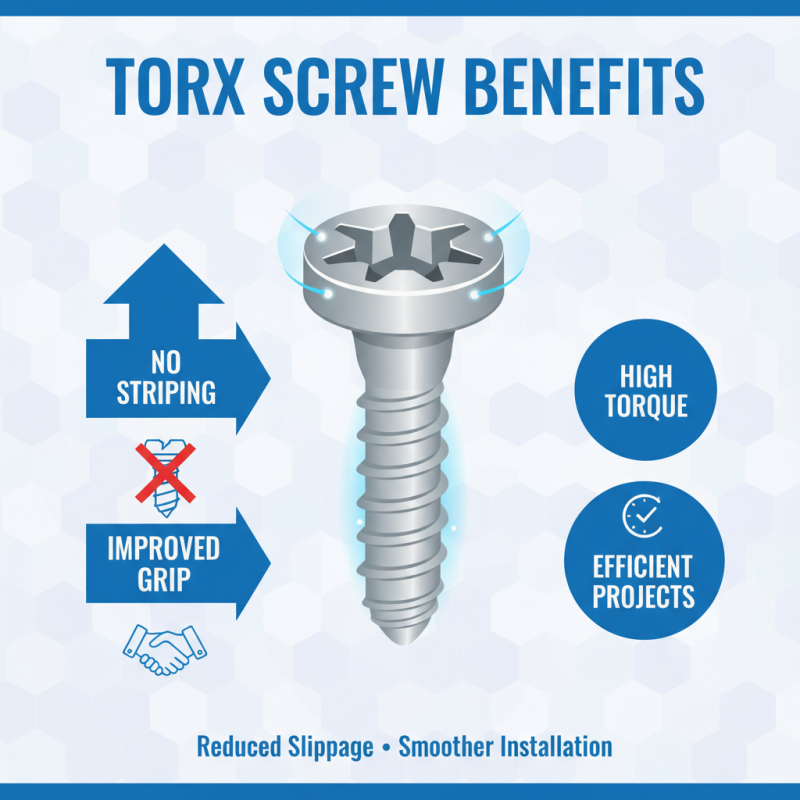
Torx screws have quickly become a preferred choice in many industries. Their unique star-shaped design prevents stripping, even under high torque. This design offers better grip and reduces slippage during installation. As a result, projects become smoother and more efficient.
Using Torx screws can boost the longevity of your assembly. They resist wear and tear much better than conventional screws. This attribute is especially useful in construction and automotive applications, where reliability is crucial. Consider this: a tighter fit can enhance the overall strength of your finished product.
Tip: Always use the correct driver for Torx screws to avoid damaging the fasteners. Improper tools can lead to headaches during installation. Moreover, remember that temperature fluctuations can affect performance. In environments with extreme temperatures, test your materials. Make adjustments if necessary. This ensures optimal results in your project.
Comparison of Torx Screws to Other Screw Types
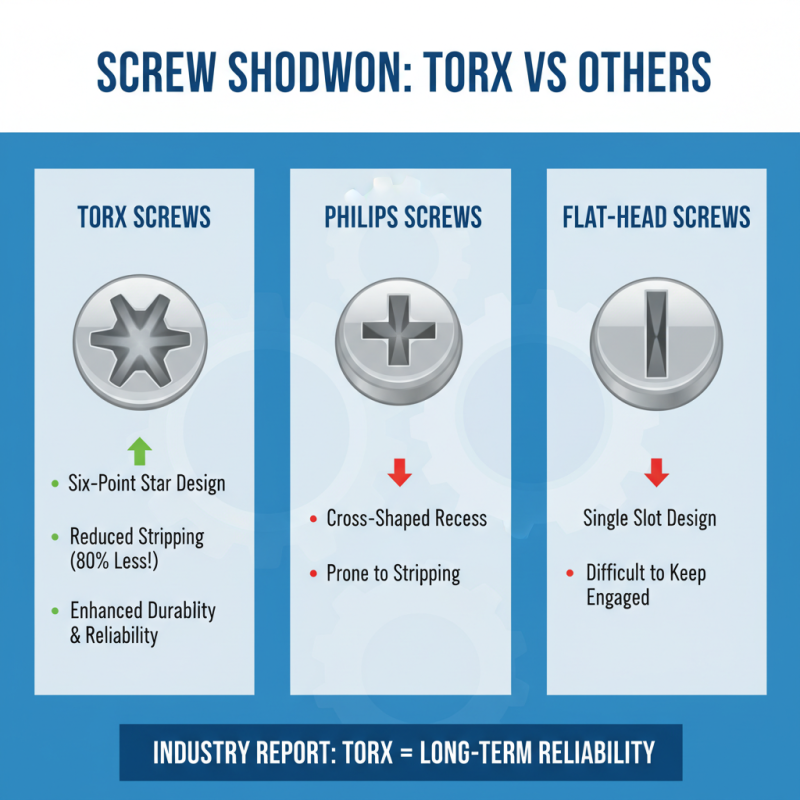
When it comes to securing various applications, screw choice significantly impacts durability and ease of use. Torx screws stand out due to their unique design, which offers multiple advantages over standard screws like Phillips or flat-head varieties. According to recent industry reports, using Torx screws can reduce stripping occurrences by up to 80%, enhancing long-term reliability.
The Torx head allows for higher torque transfer, resulting in less cam-out during installation. Research shows that this increased torque efficiency leads to faster assembly times. A study published in the Journal of Manufacturing Science noted a 30% reduction in assembly times for projects using Torx screws versus Phillips screws, translating to notable cost savings for manufacturers.
On the flip side, varying screw types each have their own application contexts. While Torx screws excel in many areas, projects requiring frequent screw adjustments may prefer screws designed for quick removability. This illustrates the need for careful consideration in choosing the right fasteners for specific tasks. The choice of screw ultimately impacts efficiency, project timelines, and overall performance.
Understanding the Design and Features of Torx Screws
When considering fasteners for various projects, Torx screws stand out due to their unique design. The star-shaped pattern allows for better torque transfer, reducing slippage. A study by the International Journal of Mechanical Engineering states that Torx screws can improve torque efficiency by up to 40% compared to traditional Phillips screws. This improvement leads to a more secure fit and can enhance the overall durability of assembled components.
Torx screws also offer resistance to stripping, a common issue with other screw types. According to data from the Fastener Industry Coalition, approximately 30% of fastener-related failures stem from stripped heads. The design of the Torx socket minimizes this risk, making them ideal for critical applications. However, while they provide advantages, some users report difficulties finding compatible drivers for more specialized sizes. This inconsistency can sometimes create frustration on job sites.
Additionally, the manufacturing process for Torx screws often uses higher-quality materials, contributing to greater longevity. Yet, the environmental impact of their production has raised concerns. Sustainable sourcing and manufacturing practices are still evolving in the fastener industry. As users prioritize durability, the attention to eco-friendly production methods becomes increasingly important. Balancing performance with sustainability will be a crucial aspect for future innovations in fastener technology.
Best Practices for Installing and Removing Torx Screws
Torx screws are increasingly popular due to their unique design. When installing these screws, use a compatible driver for a snug fit. Ensure the driver is seated properly to minimize slipping. The right torque is essential; overtightening can lead to stripped heads. A light touch is often more effective than brute strength.
Removing Torx screws can be tricky if they are rusted or overly tightened. In such cases, apply penetrating oil and let it sit. This additional time allows it to work into the threads. Use a quality driver, as a worn bit can slip and cause frustration. Sometimes, patience yields better results than force.
Proper installation and removal practices can save time and effort. Inexperience can lead to mistakes, like using the wrong tools. This often results in damaged screws or surrounding materials. Consider your approach carefully; small changes can make a big difference. Always inspect your work for any signs of wear or misalignment before finishing a project.
Advantages of Using Torx Screws
Common Industries and Projects that Utilize Torx Screws
Torx screws are gaining popularity across various sectors, particularly in automotive and electronics. According to a report by Research and Markets, the global demand for Torx screws is expected to grow annually by 5% through 2025. Their unique design allows for superior torque and better grip, reducing the risk of stripping. This is vital in industries where precision is critical.
In the automotive industry, Torx screws are favored for their reliability in assembling critical components. A study by TechNavio revealed that automotive manufacturers are increasingly opting for these screws in new models. The use of Torx screws helps in reducing maintenance issues related to loose fittings, which can be costly.
The electronics sector also recognizes the benefits of Torx screws. Many manufacturers are using them in consumer electronics to ensure durability and user safety. Reports indicate that they help reduce wear and tear, enhancing the product's lifespan. However, the challenge remains in ensuring consistent quality across suppliers. As demand increases, not all manufacturers may maintain the same standards.
Why Choose Torx Screws for Your Next Project? - Common Industries and Projects that Utilize Torx Screws
| Industry |
Common Uses |
Advantages of Torx Screws |
| Automotive |
Fastening body panels and engine components |
Higher torque transfer, reduced stripping risk |
| Electronics |
Secure internal components and cases |
Improved grip, precise fit |
| Construction |
Joining wooden structures and fixtures |
Reduced cam-out, greater durability |
| Aerospace |
Assembly of aircraft components |
Reliability under harsh conditions, precision engineering |
| Manufacturing |
Production line assembly and machinery |
Efficiency in assembly, minimized tool wear |