How to Choose the Right Furniture Screw for Your DIY Projects
When embarking on a DIY project, selecting the appropriate hardware can significantly impact the outcome of your work. Among the plethora of options available, choosing the right furniture screw is crucial for both functionality and aesthetics. Renowned furniture assembly expert, John Smith, emphasizes that “The right screw not only holds your furniture together but also enhances its overall durability and appearance.”
Furniture screws come in various types, sizes, and materials, each designed for specific applications. Understanding these differences can help DIY enthusiasts ensure their creations are stable and long-lasting. Whether you're building a new piece from scratch or repairing an old one, the choice of a furniture screw can dictate the success of the project. By delving into the intricacies of furniture screws, you can make informed decisions that elevate your DIY endeavors to new heights.
Understanding Different Types of Furniture Screws Available in the Market
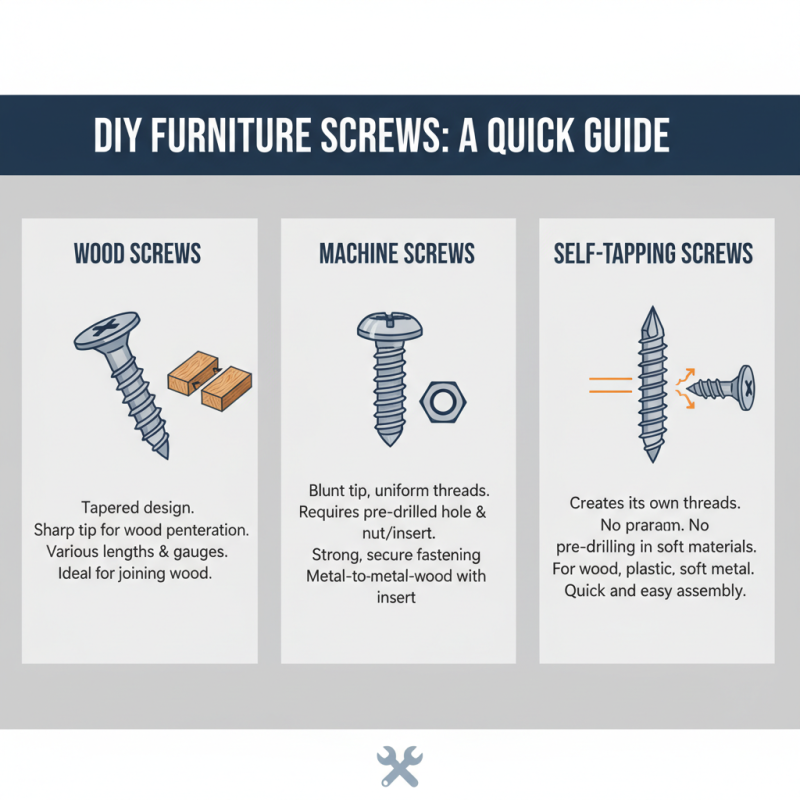
When embarking on DIY furniture projects, understanding the various types of furniture screws available can significantly impact the quality and longevity of your work. The most common types include wood screws, machine screws, and self-tapping screws. Wood screws, typically produced with a tapered design, are ideal for joining wooden pieces, as their sharp tip allows for easy penetration into the material. They come in different lengths and gauges, making it essential to choose the right size depending on the thickness of the wood being joined.
Machine screws, on the other hand, are used in conjunction with nuts or tapped holes, providing a secure and durable connection, especially in metal components or furniture that incorporates metal hardware. These screws have a uniform diameter and are available in various lengths, making them versatile for different applications. Lastly, self-tapping screws are designed to create their own threads as they are driven into the material, eliminating the need for pre-drilled holes. They are particularly useful for soft materials and can save time in assembly. By familiarizing yourself with these options, you can make informed decisions that enhance your DIY furniture projects.
Identifying the Material and Thickness of Your DIY Project
Selecting the right furniture screw for your DIY project begins with understanding the material and thickness of the components involved. Each material, whether wood, metal, or plastic, requires specific screw types to ensure durability and security. For instance, softwood such as pine generally utilizes wood screws, while hardwoods like oak may need stronger screws that provide better grip, such as lag screws or structural screws. According to industry reports, wood screws typically come in various lengths, from 1 inch to 6 inches, depending on the thickness of the material used.
Tip: When determining the thickness of the material, always measure twice. Use calipers for precise measurement, ensuring that you account for any finishes or coatings that may add to the total thickness. A common rule of thumb is to choose a screw length that is about two to three times the thickness of the thinner piece being joined.
Moreover, the screw head type plays a critical role in the project’s integrity. For example, pan head screws provide a larger bearing surface, making them ideal for softer materials, while flat head screws allow for flush mounting, which is critical in applications where aesthetics are important. A study from the American Woodworking Institute emphasizes that using the right screw size and type can enhance the overall strength of the construction by up to 40% compared to inadequate fastening methods.
Tip: Keep a variety of screws on hand in your toolbox. Stocking screws in different sizes and materials can save time during a project, allowing you to adjust your approach seamlessly based on your material measurements.
Choosing the Right Length and Diameter of Screws for Optimal Fit
When embarking on DIY projects, selecting the appropriate screws is crucial for ensuring a sturdy and reliable outcome. The length of the screw determines how deep it can penetrate into the materials you are working with. Generally, it’s recommended to choose a screw length that is approximately twice the thickness of the top material, plus the thickness of the material underneath. This maximizes grip while minimizing the risk of splitting or damaging the wood.
The diameter of the screw also plays a significant role. A screw that is too thin may not provide sufficient holding power, while one that is too thick could potentially create stress points, leading to breakage or warping of the materials. When in doubt, consider using a screw gauge to help identify the best diameter for your particular project. This ensures a strong connection that can withstand pressure and strain.
**Tips:** Always pre-drill holes for larger screws to prevent splitting. Additionally, consider the type of joint being made; for corner joints, a thicker screw may offer more support. Lastly, keep in mind the material you are joining, as hardwoods may require longer screws than softwoods for an optimal fit.
How to Choose the Right Furniture Screw for Your DIY Projects
| Screw Type |
Recommended Length (inches) |
Diameter (gauge) |
Optimal Use |
| Wood Screw |
1.25 - 3 |
#6 to #10 |
Attaching wood to wood |
| Deck Screw |
1.5 - 5 |
#8 to #12 |
Building decks and outdoor furniture |
| Machine Screw |
0.5 - 2 |
#4 to #10 |
Attaching metal hardware |
| Self-Tapping Screw |
0.75 - 3 |
#6 to #12 |
Fastening thin metal or plastic |
| Lag Screw |
2 - 6 |
#12 to #16 |
Heavy-duty applications |
Considering the Load-Bearing Capacity of Screws for Added Stability
When embarking on DIY projects, selecting the appropriate furniture screw is critical, particularly when considering the load-bearing capacity for added stability. The load-bearing capacity refers to the maximum weight a screw can support without failure, which is essential for ensuring the longevity and safety of your furniture. For example, while constructing shelves or assembling a bed frame, screws that can handle greater weight and tension are necessary. To assess load-bearing capacity, it is vital to consider both the material of the screw and the type of wood or surface it will be anchored into.
Additionally, the length and diameter of the screw should be proportional to the load it needs to support. A screw that is too short or narrow may strip or pull out, especially under weight. In contrast, a screw that is appropriately sized and rated for heavy loads will provide the necessary strength and stability, preventing potential furniture collapse. By carefully evaluating these factors, DIY enthusiasts can confidently choose the right screws for their projects, ensuring that each piece remains sturdy and reliable over time.
Load-Bearing Capacity of Common Furniture Screws
Evaluating Screw Coatings and Finishes for Durability and Aesthetics
When it comes to selecting the right furniture screws for your DIY projects, evaluating the coatings and finishes is crucial for ensuring both durability and aesthetics. Different environments can expose screws to moisture, chemicals, and varying temperatures, necessitating a careful choice of materials. For instance, screws coated with zinc or galvanized finishes offer excellent corrosion resistance, making them ideal for outdoor applications or areas prone to humidity. These coatings form a protective barrier that not only enhances longevity but also maintains the integrity of your furniture.
On the aesthetic front, the finishing of screws plays a notable role in the overall appearance of your completed project. Matte black or brass finishes can complement various design styles, adding an elegant touch to furniture pieces. Additionally, consider how the screw finish interacts with the surrounding materials. A well-chosen screw can blend seamlessly into wood grain or contrast beautifully with painted surfaces, contributing to the visual appeal of the project. Therefore, paying attention to screw coatings and finishes is essential—not only for functionality and protection but also for achieving the desired look of your DIY endeavors.